


Smart-glasses teams need location capabilities that feel natural on a small optical display. AMAP connects global data, place context and route guidance so a wearer can ask for a destination, plan a route and receive concise turn cues without recreating a phone screen.
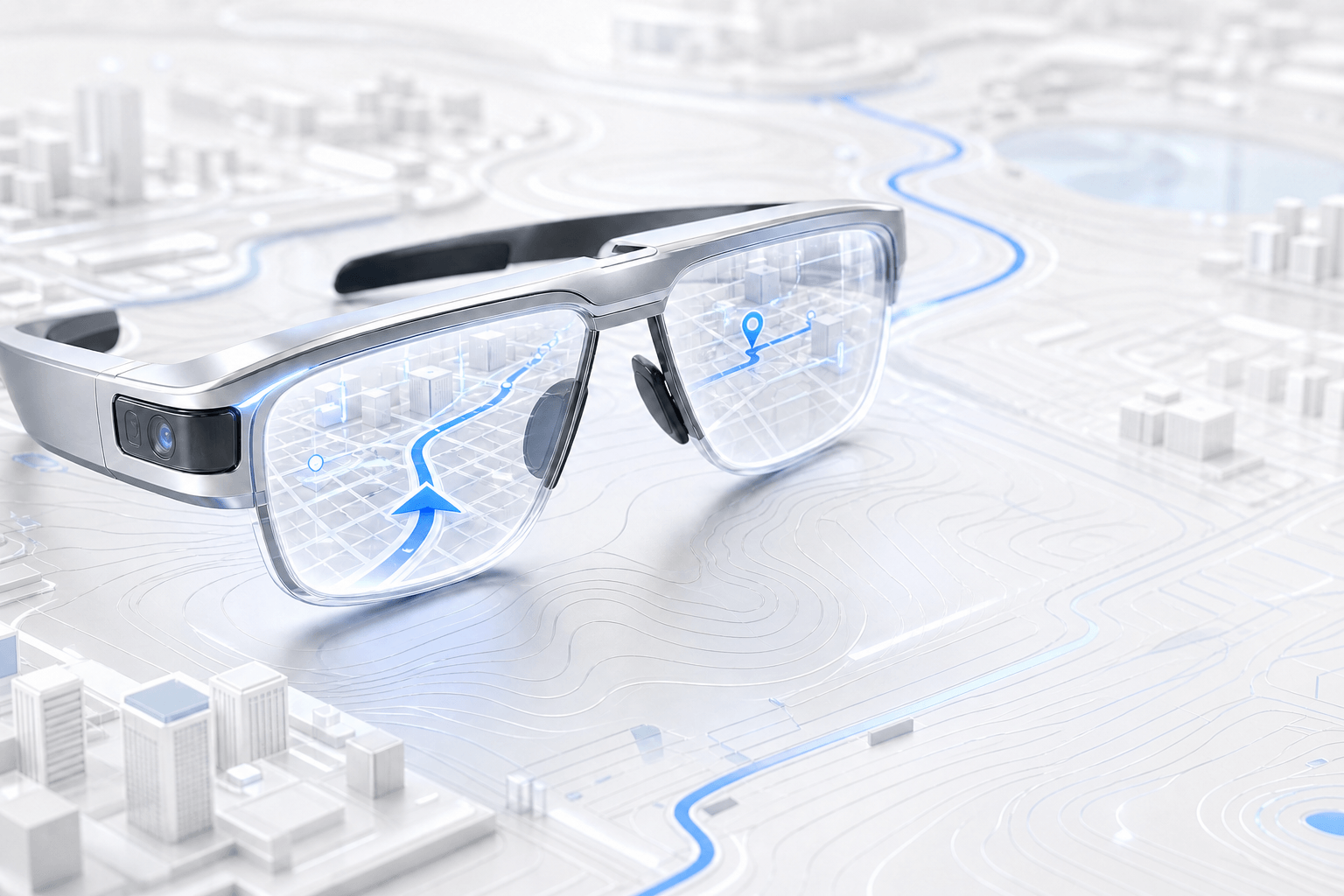
One view of the world, wherever the wearer goes.
AMAP integrates road networks, POIs, address data and administrative context across more than 200 countries and regions. That gives device makers a consistent location foundation as their products enter new markets.
With global place and route context, the same device can support travel and everyday mobility without making the wearer learn a different location experience in every country.
The location context behind the lens
can move
nearby
is located
wearer sees
Multiple layers of location context are combined before a concise cue reaches the display.
Location context: Global maps · POIs · Addresses · Administrative data.
Turn a natural request into the next clear turn.
Users can plan a route through natural voice interaction, then receive route overviews and turn prompts on monochrome or full-color optical displays. The product can keep the output focused on the information a wearer can read at a glance.
That means the glasses can show the route progress and the next maneuver without recreating a phone screen in front of the user's eyes.
The glasses show what matters now; the platform keeps the location context connected.
Choose the integration path that fits the product.
AMAP offers two practical ways to bring navigation to a wearable experience. A device maker can integrate Navigation SDK capabilities into its own companion app, or connect to AMAP navigation and project the right guidance onto the glasses.
The first path gives the OEM more ownership of the app experience. The second offers a lighter way to connect an existing navigation flow to the optical display. Hardware, operating-system and display compatibility can then be validated with the device team.
Two paths to the same optical moment
The product team chooses the integration path; AMAP supplies the location and navigation foundation.
Integration paths: OEM Navigation SDK · Companion-app projection.
From global location intelligence to glanceable guidance, AMAP helps turn smart glasses into a more natural way to navigate the real world.
← Back to AMAP News